The Origins of Fractional Reserve Banking
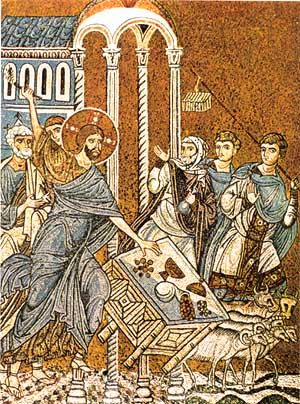 In XVIth century England people who had gold would deposit it with goldsmiths for safekeeping. In exchange they got a signed receipt guaranteeing that they could retrieve it. The value assigned to that note backed by the gold in the goldsmith’s vault made it possible for one to use it in payment.
That means if A deposited £10 worth of gold and had in his possession a receipt he could settle his debt with it. That receipt, actually a promissory note, became money. The person who took it in payment could either use it as is, or at some later point retrieve the gold in the goldsmith’s keeping.
At the same time B borrows £10 worth of gold from the goldsmith but receives a promissory note. He settles his debt to C with that note. Now there are two notes in circulation for one amount of gold. The goldsmith being smart realizes that these notes can actually be in circulation for quite some time, several years even. He issues further notes knowing that all claims would not have to be honored at the same time.
According to contemporary economical calculations he can safely lend at least ten times the amounts deposited. If there is a run of two or more people who suddenly wish to retrieve their gold he can also rely on the fact that he has debtors who owe him gold, although they originally received nothing but a piece of paper. They have to pay him in gold. And should they default he could seize whatever possessions they had, sell these, buy gold and settle the claims. I might add that the goldsmith of course lent out promissory notes for non-existent gold at interest.
Today’s banks do the same:
“Because of the ‘fractional’ reserve system, banks, as a whole, can expand our money supply several times, by making loans and investments”(Federal Reserve Bank, New York: The Story of Banks, p.5).
Simply put every loan given is a deposit. You go to the bank, ask for a loan of say $1000 and they open and account for you to that amount. If you ask for it in cash to settle a debt someone else will eventually deposit that amount. You of course still owe your bank that money, which was created out of nothing the moment you opened your mouth. The money created is debt to which they add interest.
It’s a scam. But, does it bother you?
posted by yusuf chun @ Tuesday, December 27, 2005




36 Comments:
thanks, jc!
great stuff! a must read!
"Why doesn't anyone even realize?"
In 2005, the government spent over $380 billion in interest on US Treasury bonds, and paid less than $75 billion on education.
Also, we have the mainstream media to thank for keeping the public perpetually distracted with sensational news and wedges issues.
It's up to those who know and care to get the word out.
I have made it my job to inform everyone I can about this. As should everyone else who reads it.
Here are some links to pass around the net.
http://youtube.com/watch?v=YH0XdNLUsYM&mode=related&search=
http://youtube.com/watch?v=7tQMG_NJyUk&mode=related&search=
I'd like to point out that the above links to what I'm sure was incriminatingly informative video are dead, youtube stating that: "This video has been removed due to terms of use violation."
FRB bothers me it is a form of swindling, but what bothers me more is that we are charged compound interest (usury) on credit created out of thin air by banks. We let that happen because it is legal, applies to all and must be fair.
Quotes on money & banking http://www.seek2know.net/money.html
Join discussion
http://seek2know.zaadz.com/conscious_capitalism
Even more of a scam IMHO is the federal reserves creation of money (where I get no real or tangible benefit unlike borrowing from a banker)and we the tax payers must pay interest on this "monopoly money"
I'm struggling a bit with the implications of FRB.
If I go to my bank and borrow $2,000 for a car, the bank effectively 'creates' the loan out of nothing. If I then default and can't pay back the loan, why does it matter? Why can't the bank just write it off, as they created it in the first place... from nothing back to nothing?
Taking it further. When the sub-primers all started defaulting, why couldn't the banks just write it off and create some new money?
I know this is stupid but don't know why!
it's not a stupid question! it's perfectly legitimate.
the whole thing is a scam.
You're absolutely right that the money that was created from thin air could just as easily be written off.
But, in the process of writing off the debt, they would wipe out their obscene profit, which they are unwilling to do.
That's why Bush and gang are running to the rescue right now. So the poor little banksters don't have to "pay" for the bad debts.
Bush and gang are going to suck it out of our blood instead.
Yes the whole thing is a gigantic fraud and gives the bankers power as long as we go along with it. We must stop this scam and go back to the Gold Standard and making it law that the banks can only loan money they actually have. No inflation, no deflation no super rich robber barons.
Banks can not loan 10 times their deposits. They can loan out 0.9 times their deposits. Banks loan out the money you deposit, and pay you interest. But they are *not* allowed to loan out more money than they have in deposits. They are required to reserve a fraction of the deposits, 10%. The other 90% that are allowed to loan out for interest. That how the fractional-reserve banking works. Because you have pooled you money with many other people, with the complete understanding that you money is not going into a vault, the banks must keep some money in reserve. This way, if you want to withdraw all you money you can. As long as everyone does not withdraw their money at once (called a bank run) then it's OK. The banks get interest on you money, and pay some to you. If you don't like it, you can hide your money under you mattress.
civbert- I have to clearify for you that "theoretically" the bank can loan nearly ten times as much as their deposits.Say joe deposits $1000, the bank must keep 10% in reserve (as currently dictated by the FED)The bank now loans the $900 that's left of joes' deposit to Tim. Tim buys a used car from Bob for $900. Bob deposits the $900 in the bank. Now the bank sets 10% of that $900 in reserve and has $810 now to loan out to someone else and Bob still owes for the $900 he borrowed plus interest. This goes on and on and the banks collect and collect. See how it works?
Now days i thank my lucky stars for people like you....the veil is lifted like a weight of unknowing.....poetic stuff....Wow! thanks to you guys for making me aware of "Fractional Reserve Banking Systems........What a scam!!......It is just too......lost for words........Those who i have made aware are equally gratefull.....My GOD.....no it's not sport.....i religiously like to search for the truth......thanks again...My specialty is in common domestic showers of all things.....yes yes!...my site watersavingshower.comn is about this research and i hope to give some truth back to the world in return for that which i have allready learned......We need luck as well.....see yah in a better world...oh yeah!, i wonder if any one has seen "banking blow" by the author of "money as debt"??
Great post, simplifying something that is too often presented as being very complex.
hello nice topic
so the goldsmith was a greedy bastard and was betting that people will just leave the money and never pick it back up. when will the world realize this is another bubble and burst it like all the other scams over the past 10 yrs.
You smart and buy Sword of the New World Vis, you play the game is right, Sword of the New World Gold. you have a wonderful time, buy vis, I have it cheap snw vis, I buy Sword of the New World money.
Looking For discount louis vuitton handbags? The store online sells the louis vuitton bag. Welcome to visit and buy lv handbag. We offer the best price for you.
What a bad description of Fractional Reserve Banking.
People read this and go around saying that the banks can create money out of nothing, still completely failing to understand how the system works. Then someone askes, why do the banks need money from the government, when they can create money out of nothing and your reader just looks stupid because he does not know.
I have always asked myself and wondered about the origins of the fractional reserve banking and I came to your blog by accident and I finally found out, thank you. Now I need to figure out what Sildenafil Citrate is for, but I will handle that
If you are British, it's so good that there are Yves Saint Laurent uk, YSL shoes, Let me tell you
YSL shoes
Yves Saint Laurent shoes
Cheap YSL shoes
replica YSL shoes
discount YSL shoes
louboutin almeria wedges
naturally like your website however you need to take a look at the spelling on several of your posts. Several of them are rife with spelling issues and I to find it very bothersome to tell the truth on the other hand I’ll definitely come again again.
web domain registration
interesting, thanks again!
I would love to write and say what a great job you did on this, as you have put a lot of work into it.Unfortunately, I'm not sure how to leave a comment.... I heard about how Vermox which online which helps us to improve our health.
That seems to be of some sense. Nice.
Solar Street Lights
Good blog! I actually love how it is easy on my eyes and the data are well written. I am wondering how I might be notified Order Amoxilwhenever a new post has been made.
Today the temp reached 39 degrees. Now, for me, I can cope. Just chill, you know, I'm on holiday for another three and a half weeks. Boom. But when you've got an ankle biter refusing to let go of HIS bone, everyone is going to scrap. What do you do, what do you do. Go to the beach (no shade, cook), forests (nah, extreme fire risk), swimming pool (nah, China has hired it for the day), shopping centre's (air conditioned, the perfect running track for Splodge (I apologise for all I have done, he's me, it's a fucking nightmare), home (had to fence off the pond that Splodge ran into yesterday, today in 39 degree heat). No. You take the siege option and stay at home. Anything goes. Eventually, the seige is broken when I pronounce to the home, at 7 o'clock, 'I'm taking the Splodge to the reserve. Nice and warm, Splodge spots the moon and hoots (leave now warning one).The boardwalk is empty (leave now warning two) and it seems a bit hot (you're an idiot, you deserve what's coming) but we venture forth. Halfway across the boardwalk, Ewan happily points out an Eastern Brown snake baking in the sun (The eastern brown snake is considered to be the second most venomous terrestrial snake.The venom has a SC LD50 range of 0.0365 mg/kg —0.053 mg/kg and consists mostly of neurotoxins (pre-&post-synaptic neurotoxins) and blood coagulants. Clinically, the venom of the eastern brown snake is known to cause diarrhea, dizziness, collapse or convulsions, renal failure, paralysis and cardiac arrest. Without medical treatment, bites can be fatal. As this species tends to initiate their defence with non-fatal bites, the untreated mortality rate in most snakebite cases reported is 10—20% which is not very high) ABC ya.
So we go back to the regular swing haunt. Unfortunately I did not realize that it was still 38 degrees. Splodge is asleep now due to heat exhaustion, but at least he is 29 degrees warm.
Thanx. A New Year rezzie for 2012 is to try to understand the global banking system. Easier said than done, I think! However, I've made a start.
The whole thing sounds like a bubble, and what happens if it goes pop!
Good blog! I actually love how it is easy on my eyes and the data are well written. I am wondering how I might be notified whenever a new post has been made. I have subscribed to your rss feed which should do the trick! Have a nice day!
generic amoxil
Thanks for the nice blog presentation as it explains clearly about its topic.Nice to have some useful information here.
web design company
We cannot ignore the magic associated with numbers and hence banking. How are the banks able to get away with such daylight robbery? It is witchcraft and the bankers are magicians. The cast a spell on the borrower. The get a thrill out of deceiving the masses including government leaders. Judgment day is coming however.
If you need any kind of web hosting services lets contact Hostingsafety.
Web Hosting India | Domain Name Registration India | Web Hosting Companies in India
An impressive share! I have just forwarded this onto a colleague who has been doing a little research on this. And he actually ordered me lunch due to the fact that I discovered it for him... lol. So allow me to reword this.... Thanks for the meal!! But yeah, thanks for spending time to discuss this issue here on your blog.
startlr.com | saludlimpia.com | mcdonaldsgutscheine.net
Good article, I've seen many articles today, but only this article is of interest to me, thanks raja poker
Indonesia
Easy
Learning
Indonesian
Jual Beli HP
bimbelLampung
Service HP
Best Online Store Indonesia
lampung
POS software developers in hubli
POS software development company in hubli
What an amazing article i really impressed after reading your article and i'm also want to write like this for best pos software in pakistan . please tell me some tips that lead me towards professional contents.
Post a Comment
<< Home